Why horizontal lux alone misleads venue owners
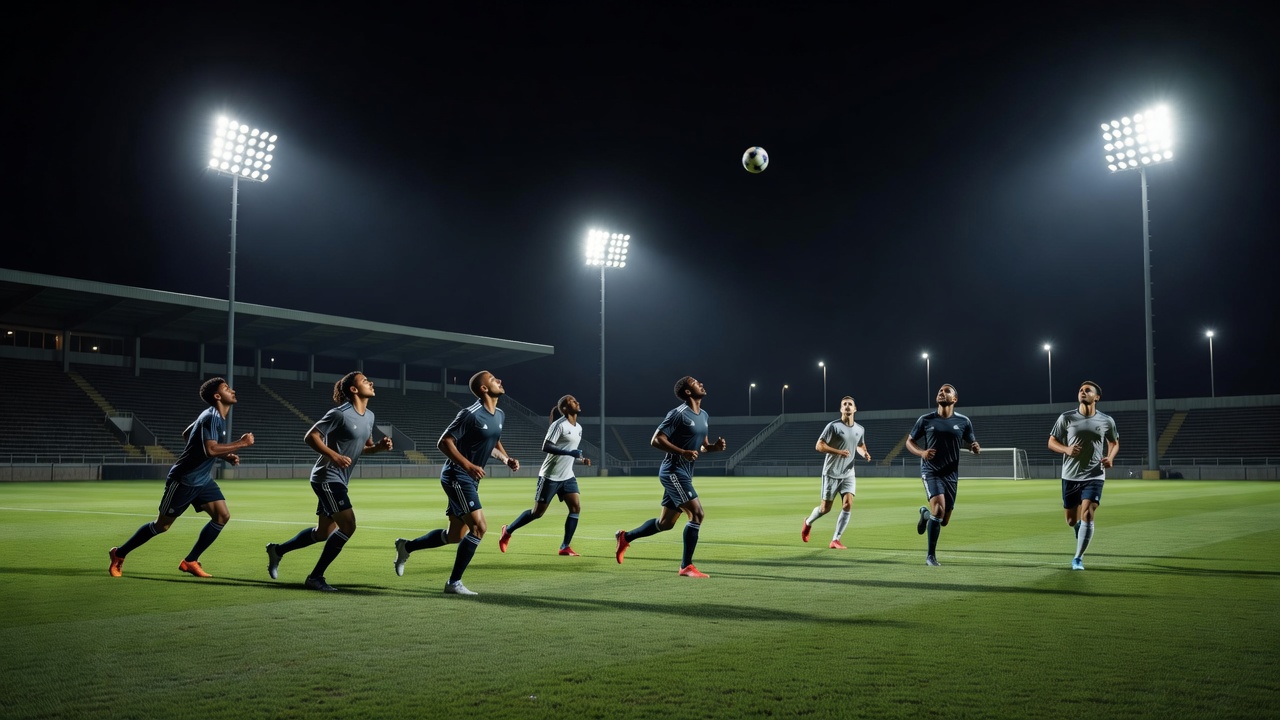
For decades, community pitches and professional arenas alike were summarised by a single average horizontal illuminance number measured at grass level. That habit lingers in tender documents today, even though human participants rarely stare straight down at the turf. In football, rugby, athletics, and field hockey, athletes read three-dimensional space: the shoulder angle of an opponent, the seam of a ball climbing twenty metres above the touchline, and the position of teammates across an eighty-metre expanse. Horizontal illuminance establishes ground brightness and background adaptation, yet it reveals little about how legible an upright figure looks from the opposite stand or a pitch-side lens.
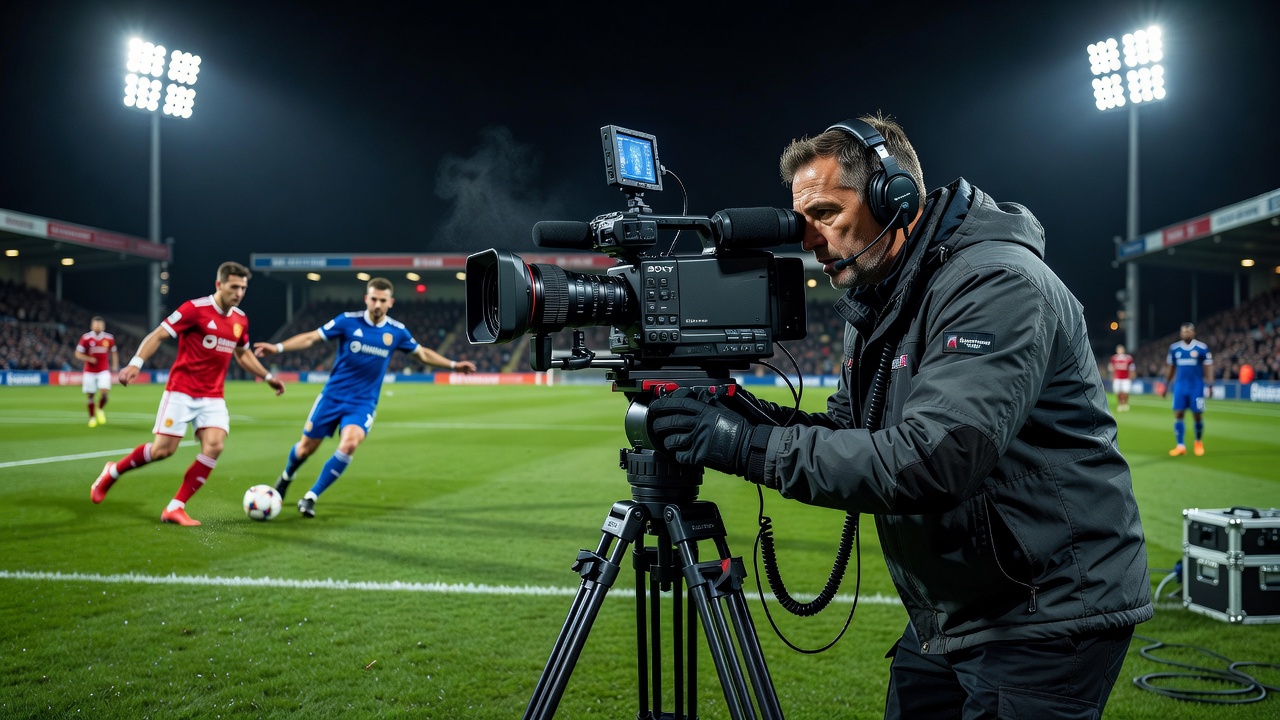
European Standard EN 12193 and ANSI/IES RP-6-20 therefore pair horizontal maintained illuminance with uniformity limits, glare ceilings, and—for televised venues—vertical illuminance grids calculated toward main and secondary camera positions. When a stadium invests heavily in vertical light from only one side of the roof, players turning toward the shaded side lose facial modelling and depth cues. True visual clarity comes from balanced multi-directional light that produces gentle modelling shadows without creating harsh double or quadruple silhouettes around the ball.
- Horizontal Illuminance (Eh)
- Light falling onto the horizontal playing surface, expressed in lux. Governs overall field brightness, ground markings, and visual adaptation for athletes and spectators.
- Vertical Illuminance (Ev)
- Light incident on vertical planes facing specified camera positions or four cardinal field directions. Critical for facial recognition, jersey legibility, and three-dimensional ball tracking.
- Uniformity Ratios (U1 and U2)
- U1 expresses minimum-to-average illuminance (Emin/Eave), while U2 compares minimum-to-maximum (Emin/Emax). Tight uniformity prevents abrupt visual transitions as action sweeps across the field.
- Glare Rating (GR)
- Outdoor discomfort glare metric defined by CIE 112. Evaluates direct veiling luminance from luminaires against the background luminance of the playing surface.
Uniformity, colour quality, and the slow-motion lens
Spectators sitting fifty metres from the touchline rely on steady field luminance so their eyes do not repeatedly adapt as the ball moves from corner flags to the penalty area. If one quadrant reads 1,600 lux while a corner drops to 700 lux, the human iris adjusts slowly enough to blur fast passes, and broadcast exposure systems struggle to balance highlights against shadowed faces. High-tier competitions governed by the UEFA Stadium Lighting Guide or FIFA technical recommendations enforce strict gradient limits across adjacent grid points so luminance changes remain imperceptible during sweeping camera pans.
Colour fidelity plays an equally quiet but decisive role. Historically, general Colour Rendering Index (CRI or Ra) was the default benchmark, yet Ra evaluates only eight pastel test swatches and can overlook deep reds crucial to skin tones, turf health, and team kits. Broadcasters increasingly turn to the Television Lighting Consistency Index (TLCI), documented in EBU Tech 3371, alongside IES TM-30-20 fidelity and gamut metrics. At venues such as Aviva Stadium in Dublin and Ullevaal Stadion in Oslo, stable correlated colour temperature around 5,600 K combined with TLCI values exceeding 85 allows outside-broadcast engineers to colour-grade live feeds without heavy post-processing corrections.
Super-slow-motion and ultra-high-definition cameras introduce an additional hidden constraint: temporal light modulation. Conventional alternating-current drivers can ripple at twice mains frequency, producing dark rolling bands when shutter speeds exceed 1/1,000 of a second. Intelligent LED stadium systems specify direct-current or high-frequency drivers keeping flicker factor below 1% across full and dimmed scenes, verifying both nominal output and partial dimming states rather than assuming a flicker-free rating at 100% power holds at 50%.
“Broadcast quality is rarely won by flooding the grass with excess lux; it is secured when vertical uniformity, colour stability, and low flicker converge across every camera sightline.”
Synthesis of FIFA Football Stadiums Technical Recommendations & EBU Tech 3371
Matching class thresholds to real use
Not every sporting facility needs televised elite levels. Over-lighting a municipal athletics track or regional rugby pitch wastes capital, increases surrounding light spill, and raises thermal stress on luminaire components. EN 12193 divides sporting tasks into Class III (recreational and training), Class II (club competition and regional tournaments), and Class I (national and international non-televised competition), with dedicated broadcast overlays above Class I. Intelligent systems allow a multi-use ground to run at Class III during weekday youth practice and step cleanly up to broadcast vertical targets only on televised match nights.